Professional Careers

A Bit of Brain Stimulation

mail

-Written by ML, a current graduate wife

Before I joined my now-husband where he is attending grad school, I was completing a fairly distinguished internship. Unfortunately this was also the year of the big economic crash. Just as I began to job search, companies were forced into hiring freezes and lay-offs. I decided that if I was going to be unemployed, I might as well be in the same town as my boyfriend.

After a couple more months searching for a good job, it was time to take one that would pay the bills.  There aren’t a lot of opportunities here for grad spouses, and if they can manage it many of them don’t work at this stage in their lives, but for us that wasn’t an option. While my job does pay the bills, it doesn’t do much else, and I soon found myself seriously searching for some brain stimulation.

If you’re looking for the same, hopefully this helps.

Take Classes

Probably the most obvious answer, but there are several ways to go about this. You can enroll in a class for credit, but this can be costly. If you don’t need credit, find out if your spouse’s school will let you audit them for free. Many universities offer free recordings of classes online. What better way to learn something that’s not in your field than online in your home, without any homework or witnesses, to show you just how little you know about the topic? A lot of schools offer adult continuing education courses either online or in person. These are generally cheaper (and more fun) than a regular class. If you do want credit it doesn’t have to be at the same school your spouse attends; community colleges or other local schools can be more cost effective.

The Library

Public libraries often have evening courses for adults. If they don’t offer what you’re interested in, ask about starting one. The topics for these are more creative, less time consuming, and less intense.

Volunteer

Many places offer opportunities to volunteer. An upside to this is often flexibility. Don’t just look for a place that’s in your field – look at the fields places have to offer. Our local aquarium, for example, needs volunteer biologists, divers, educators, marketers, and staff for events.

Join or Start a Club

Reading, knitting, working out, or whatever floats your boat. See if there’s a club for that. Look beyond the college to the community for a broader range of things.

Read, read, read. I read before work so that my morning isn’t just about getting up, getting ready for work, and going to work. I read pretty much any time I can. No matter how flat I feel my brain is getting from work, it feels good to be able to hold an intelligent conversation around my husband and his colleagues.

Listen to Podcasts

What a great invention! I don’t do my hair in silence any more. Instead, I listen to an informational and highly entertaining podcast. I can listen to and from work, while I do the dishes, and while I’m at the gym.

Having a job that doesn’t stimulate you isn’t ideal, but sometimes it’s what we have to do. Let’s make the best of it!

What do you do for brain stimulation? If you have other ideas you’re welcome to leave them in the comments. 

Identity · Professional Careers · Vocation/Gifts/Calling

Piecing it Together

image found here
-written by Keeley, a current graduate wife

I wonder how many of us are in this situation: I studied something which I loved in college, and still love, but had no delusions was going to be a vocation without graduate study. When I thought about what to do after school, the most appealing options were overseas volunteer or educational internships, and I figured that was a workable-enough plan until I had something more concrete figured out. In the meantime, I met my future husband the summer before senior year in college, and knew that if there were a person on earth with whom I could imagine spending any significant amount of time – let alone the rest of my life – I had found him. I decided this relationship was something I had no desire to pass up or take for granted. Fortunately, he felt the same way and we were married soon after I graduated college.

Flash forward to my first September out of school since I was five years old. Living with my new husband in a new city 1,000 miles from my folks, paying rent for the first time, and looking for work, armed with an undergraduate degree in Music History and a bazillion extra-curricular activities which probably wouldn’t help my cause. Oh, and very minimal job experience, consisting of interning at an 18th-century backcountry farm and playing in a string quartet. I tend to forget how desperate I felt to find a job at that time, but I do recall that I canvassed the areas around our apartment, applying everywhere I could, including CVS, Pier One, a local ice cream shop, a local grocery store, and LensCrafters. “Oh, you have experience analyzing the modulations in the Third Movement of Mahler’s Seventh Symphony? That’s just the type of thing we’re looking for here at LensCrafters. Why don’t you have a seat and fill out the tax information?”

Thank God I found a job which, quite honestly, suited me to a “T” and was with a company I adore, Ten Thousand Villages (look it up. For real.) I still work for them, as they have many locations in the U.S. and I was able to transfer when we moved to where we live now. I currently work 20-24 hours a week there as well as at the Historical Society a couple hours a week, and I’ve also got eight violin students and do a little paperwork for a local nonprofit organization. None of these is a “perfect job,” but as time continues to pass, I wonder if that single job exists for me. My current conclusion is that piecing together all of these different options creates an ideal situation for my interests, abilities, and desires. The reason I share this is because, for me, it is a key to appreciating this time of life more fully.

One of my best friends and I initially bonded over a wonderful book called Refuse to Choose by Barbara Sher. In it she discusses the necessity of determining your interests, skills, and goals in choosing a profession (or two or three). If it sounds rudimentary, it is–it’s just that I had never thought of it in her terms before. I found it incredibly liberating that it was “okay” to have several different interests and desires for myself in terms of employment, both paid and unpaid. As long as we are able to pay our bills, it’s fine not to have one full-time job. Remember that company I was telling you about that I started work with after college and still adore? They offer health benefits for part-time employees. Yep, these types of situations really exist! At this time in my life, it actually does make the most sense to spend my time in all these employments, because it enables me to use and develop different parts of myself–organizing, creating, reading, teaching, learning, helping others. More specifically, it helps me to integrate interests I have without leaving any aside–music, history, world crafts and cultures, and community development (Oh, and, get paid to do it).

If I were writing this to myself right out of college, I would advise myself to take opportunities that present themselves and to not be afraid of change, to be willing to try something new even if it doesn’t seem like a perfect fit. Yes, it would have been nice to study something more likely to be directly transferable into the job market, like education or nursing. But I am grateful for the rich experiences I’ve had over the past six years, including a stint working at a bakery chain, where working the closing shift promised delicious leftover baked goods for breakfast the next three days! And if you are in this boat, I want to encourage you to realize you likely have more transferable skills than you think you do. Off the top of my head, here are some things I learned in college which have undoubtedly helped me along the way: punctuality, teamwork, delegation, time management skills, listening to instruction and following directions, respecting authority, approaching a problem with creative solutions, and most importantly being able to pursue and learn anything new that interests me.

At the end of the day, I am satisfied with the ways I spend my time and energy, and I look forward to continuing to develop skills and interests I pick up throughout my life. I may not know where we’ll be in a year’s time or what I’ll be doing, but at least this time I’ll have a little more job experience on my resume.

What are some ways you have used unexpected skills in your job/jobs? How do you integrate varying interests and abilities in your employment?  Has this been especially challenging or easy being on the graduate wife journey?

Moving · Professional Careers

What Will My Toaster Look Like?

-written by Sarah Glenn, a current graduate wife

We were moving in three weeks and items were slowly being sold off one by one. The first real, bittersweet casualty was the toaster. That magical device that gave our rushed mornings so many easy breakfasts and our bread a golden hue.

OK, maybe I am over-romanticizing the toaster. But being forced to fit your family’s life into four suitcases can do funny things to a person.

After two years studying abroad, it is time to return to the USA. For 730 days (give or take a holiday or two), my husband has been buried eyebrow deep in medical school at St. George’s University. It is not a U.S. medical school, meaning that the first two didactic years must be spent abroad. The next two years will hold all the real patient-centered fun, when he takes his book learning into the hospital for his clerkship years.

While he has carried on this all-consuming love affair with medical science, I have been freelancing, reporting, blogging, running a university organization, earning my Personal Fitness Trainer certification, learning and growing.

But life is a snow globe and once again, the hands of fate are shaking it up. The dust will settle in July when the school finally tells us where we are going. For the next two months my professional title will be “Freelancer who lives in her in-law’s basement.”

Exciting, huh?

Transition is hard for everyone. But a flying leap into the unknown lugging four suitcases is terrifying. When that flying leap is from a foreign country, the stress level gets bumped up a few notches and unanswerable questions start flooding your already overworked mind. Suddenly the stability of having one toaster that you will keep for the rest of your life starts sounding pretty good.

The price of higher education is steep and laying the money and inconvenience down on the table can feel like a nerve-racking gamble. After all of this struggle, will I be able to find a good job in a place where we fit in? What will the neighborhoods be like? Will professional life post-education be the all-glorious heaven we thought it would be?

These questions ring through the mind of every academic (and academic’s family). All students can agree that we are here now (in strenuous hard-work hell) because we want to be somewhere better in the future. The heart palpitations come when we realize that we aren’t quite completely sure what “better” will feel like. The whole thought process can be beautifully summed up by the toaster; will we have a shiny 4-slicer Black and Decker or the $5 Walmart brand?

What will my toaster look like?!

Many of my cubicle-dwelling friends have expressed envy for our nomadic student lifestyle. It must be liberating, right? Leaving all but the bare essentials behind for a life of discovery and progress. As those desk-dwellers come home at the end of their day, household items fade into the background as a dream of unfettered freedom beguiles their subconscious.

Freedom is great, but have you thought of what you would do with the toaster?

Unfortunately it is human nature to be fettered. Most of us are inexorably tangled into a dream of success. We all want something better, and whatever shape your dream might take, it will probably involve lugging around a little stuff with you. Once you decide on the life path of liberated travel, those household items don’t just fade into the background while your Marry Poppins bags pack themselves with everything you might need or want.

As we travel that road towards being a doctor or a lawyer or a rock star, or whatever we may dream, we will each acquire our own “toaster”  – that thing that tells us that we are home. Whatever home means to you, don’t forget to appreciate the little things that give your life stability – such as the toaster.

How do you deal with the transitory nature of graduate education? Is knowing that where you are isn’t where you are going to stay a comfort or a burden?

Job Search · Professional Careers

Plan F

-written by Keeley, a current graduate wife

Any time my husband, Jason, begins a sentence with the words, “Well if this whole professor thing doesn’t work out, I can always…” I know that what follows is going to be a real gem. He’s come up with widely varying ideas of how he can make a living, most of which involve chocolate-chip cookies, or kittens, or a combination of the two. I think my favorite idea involved being a farmer who grows his own peanuts, strawberries, and mangoes (the geographic location of this farm is obviously yet to be determined) and raises baby goats, kittens, golden retrievers, and donkeys (because in his words, their ears are “sweet.”)

In all seriousness, the job market does look pretty grim for professors of just about anything these days, and Jason shares the concerns of any liberal arts PhD candidate, as he is currently pursuing a degree in Modern Christian History. At the end of this endeavor, he will know more about the East African Revival of the 20th century, including all the sociopolitical dynamics of colonialism that helped shape this movement, than maybe two or three other people who are alive. However, this doesn’t ensure that he will find a job teaching or researching anything related to these issues. He is, of course, attempting to get as much practice as possible through conferences, publishing articles, and teaching, and you can bet that he’ll be applying for every job opening far and wide once the time comes, but at the end of the day, his chances depend greatly on the job market and on who’s hiring and exactly what they’re looking for. I only give this background to explain why my husband may have fantasies of being a kitten farmer.

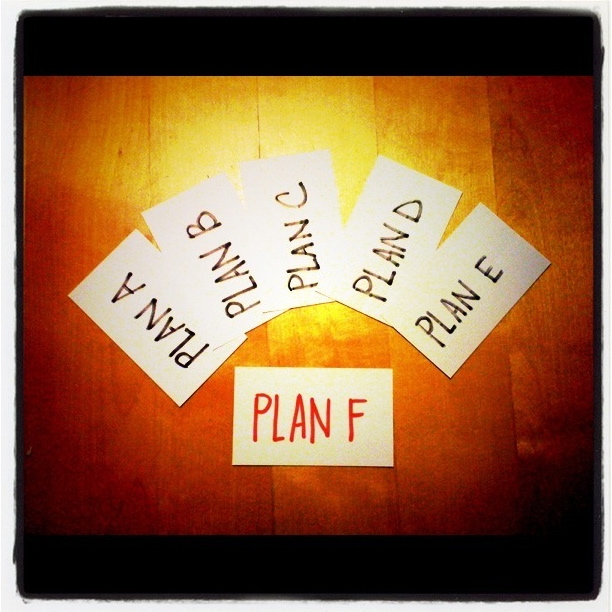
All things considered though, I think it’s a healthy exercise, right? What’s the harm in coming to terms with the fact that yes, while our lives are largely centered around this particular undertaking, we are still human beings with other identities and interests? This is easier for me to do because I’m not the one staring at a computer screen every day, scanning  through microfilm databases, accessing and decoding handwritten documents, or attempting to write a book which in all likelihood, only a handful of people will probably ever read. But for Jason, I can understand why some days he might consider a “backup backup” plan, (or “Plan F” as one of my best friends calls it, whose PhD husband’s own Plan F happens to be to work at McDonald’s).  I can understand the appeal of being a day laborer, or having another type of job that involves getting up, going in to work, doing the required tasks, then coming home and forgetting about it, versus a career like the one he is currently embarking on, which requires all of him–body, mind, and soul, so to speak.

I think we can all identify with this struggle, and with the pessimism that may come from considering seven to eight years of our life spent in pursuit of a degree which may or may not result in a desirable appointment. This is partly why I am grateful for this very blog, where we can share our concerns as well as ideas on how to make these days, months, and years count as much as possible. This is also why I am grateful for Jason’s hobbies, which include baking (some mind-numbingly delicious cappuccino-cream cheese brownies emerged from the oven last night thanks to him), because you never know when the little cupcake bakery downtown might be hiring! And in between sessions of researching and writing, he gets a fair bit of cat-snuggling in, which has enabled him to communicate effectively through expressions and meows with our two cats (at least he seems convinced of the fact). Yes, we have actually given some thought to which professor he would ask for a recommendation, were he to apply for a job at PetSmart.

In all honesty, I have a lot of faith in Jason and the hard work he does, and the respect I have for him to get up early every morning to develop this incredibly fascinating project can’t be overstated. But being at this stage in life requires a lot of flexibility, quite a bit of humility, and maybe a pinch or two of levity. So once all this PhD business is done and we get settled on our cat ranch in Wyoming, we’ll be glad to have you up to visit. You can stay in our bed and breakfast, where we’ll show you around and introduce you to our baby fainting goats, and we’ll save some cappuccino-cream cheese brownies for you in the kitchen.

In this graduate season of life, do you discuss what may happen if the ‘plan’ doesn’t work out the way you had intended? What does that look like?