
Moving · Sacrifice

Our Little Adventure

written by Emily, a current graduate wife

My journey begins probably much like many others who have, along with their spouses, made the decision to attend graduate school.  John and I were college sweethearts and had the wedding of our dreams soon after we graduated from Samford University.  After our honeymoon, John and I fell into a wonderful rhythm of living and working in Memphis, TN, and enjoyed a season of sweet friends and family there.  We bought a house and spent months renovating and decorating it, planning on staying there until we had a few children of our own.  Well the Lord had different plans for us and a fire was ignited in John’s heart to pursue his dream of going to graduate school to earn his MBA.  We prayed, and prayed, talked and talked, cried and cried (ok, just me), wondering if this was the right decision.  We decided to uproot our comfortable lives and move twelve hours away to North Carolina.  We left great jobs, great friends, our first home, and a wonderful church, not knowing what the future might hold.  We did know however that we were in this together.  Our little adventure, we liked to call it. Something so ‘out of the norm’ and something so challenging, exciting and new.


Here we are 1 1/2 years into business school, and we are very much still living in our adventure.  We have gone through the ups and downs that come with moving and going back to school.  Such as: John staying at school until 10pm every night, only to come home and do more work, adjusting to a tiny apartment where we can hear our neighbors sneeze, me finding a new job and having to work for 52 straight weekends in a row, the we’ve suffered through the stress of being apart for an entire summer as John went away for an internship.


Spending the summer apart might have been one of the hardest things we have done together as a couple.  Since I wasn’t able to pack up and leave my job here in NC, John had to gather up his things, his side of the sink, his pillow, and drive 10 hours north to Philadelphia…without me.  For eleven full weeks.  I still remember the day he left, not knowing how I was going to make it without him.  We had never been apart over the 7 years together (3 1/2 married).  Could we survive with just phone calls and skype dates, and only 2 visits over 2 1/2 months?  I seriously contemplated hiding in his suitcase and just quitting my job all together.  The first week was definitely the hardest.  Going to bed alone, cooking dinner alone, and seeing his face on skype brought tears to my eyes every time I saw him.  BUT, the first week came and went…and so did the next two.  each day, I felt stronger and my love for him began to grow in a new light. I could DO this! Our conversations were deeper and more meaningful.  Our skype chats were long and mushy.  My trip to visit him in the one of the following weeks was one of the sweetest times we’ve ever had together.  They say distance makes the heart grow fonder, and I am now a 100% believer in that.  Being apart made us cherish our time together so much more, and although we had to face trials and frustrations, I am so grateful for last summer.  If I had to give any advice to someone who is gearing up for time apart from their spouse (whether it’s an internship, or residency, etc.) I would say these 3 things.


1. Start a new “tradition” with each other for that time (whether it’s calling to say goodnight, a “good morning” text, a weekly piece of snail mail, or sharing a daily scripture verse).  Having something to look forward to each day together is fun and exciting and it will bring at least some form of consistency to your life.


2. Listen to each other.  Phone and email conversations are probably not what you are most used to in the daily communication with your spouse.  It’s really easy to misunderstand or mis-communicate when you are not sitting right in front of each other.  Sarcasm is sometimes very hard to interpret in a phone call.  Listen well and make it a point to let each person talk about his or her day.  Ask questions.  It’s a new and different way to communicate so treasure learning these new ways to share and grow.


3. Enjoy the present.  It’s very easy to just mark off the days on the calendar until you are together again, and constantly look towards the future, but try to enjoy the ‘in between’ phase.  Spend time with your girlfriends and watch “the notebook” 15 times in a row.  Light candles and eat popcorn for dinner.  Take long baths and buy yourself fresh flowers.  Sometimes it’s the little things that make you enjoy the day.  Take time and do that for yourself, trust me you’ll be glad you did.  You will be refreshed and happy when you have your phone call with your spouse later that night, instead of feeling isolated and alone.


Through our entire graduate journey, we have learned a lot and have grown in so many ways.  We have learned to never take a single moment together for granted.  We have learned that our cozy little apartment makes us cuddle that much more.  We have been reminded of the importance of encouragement and unconditional love in a marriage.  We have re-learned our love languages and have strived to put them into practice every day.  We have learned how necessary it is make decisions together and for us, to pray together.  We have been through weeks at a time where a quick meal at the dinner table was the only time we had together that day — and have learned to turn off our phones and tv’s during those times.  We have been shown that having friends that are in this same phase of life can make such a difference to your sanity.  And, we have learned what it means to be TOGETHER every step of the way.  Homes may change, friends may come and go, doors may close, and dreams may change, BUT, no matter what — it’s our little adventure. It’s one of support, sacrifice, and unconditional love.  And as long as we are together, there is nowhere else I’d rather be. 

Have you had to live apart from your spouse for an extended period on your graduate wife journey?  How have you handled the transition?

 

Community · We're Done! (life after grad school)

Our Transition Beyond…

written by AB, a former graduate wife

Our graduate adventure began with my husband and me working on our master’s degrees while living in Dallas, TX.  Following my graduation, I began working as a speech therapist while my husband pursued further graduate qualification.  When the time came to make the transition into a PhD program we decided to move to Oxford. It was our best option and we had nothing holding us back, so we went for it! For two relative homebodies, the decision to change continents was a difficult one. It was by far one of the craziest and best decisions my husband and I have made together.  Over the past five years, or the majority of our marriage, we met our dearest friends, and expanded our family not once, but twice. And now, after our time in the UK, we find ourselves once again back in Dallas, TX.

As we make the transition into life outside of our graduate study, I find myself desiring the same sort of community we enjoyed in Oxford.  Sadly, it was not until the end of our time there that I realized what a gift we had been given in the friendships cultivated during this time. We were surrounded by like-minded people with similar goals, that loved us, treated us as family, and would do anything for us.  We gave of what we had, celebrated accomplishments, shared in difficulties, and sharpened one another.  At a time when we were so far from home, this community became our family. Although it finds easy expression in the graduate community, I am convinced that such community can be cultivated in countless different contexts. The challenge is finding it in those seasons of life where it doesn’t come so easily.

Since returning to the States we have been very blessed to have our family close by; family who have supported us through every leg of this journey.  Despite this support, I find myself feeling a bit behind in some way, often asking myself ‘what have we been doing the past five years?’  Yet, even as I struggle with this I am surprisingly not envious of those around me who I am tempted to consider ‘ahead’ of us.  We have neither finances nor job security, but there is so much beauty in a shared adventure, and I would not trade any amount of security for our time in Oxford.  For our family this adventure has lead to a greater trust that we are a part of something larger than ourselves. As hard as parts of this process have been, given the opportunity I wouldn’t change a thing.

As a graduate wife, how are you fostering community where you live?  

Has it come naturally or is it a challenge?

If you have transitioned to ‘life beyond graduate school’ have you had a similar experience as AB’s at finding community?

Children · Monday's Food for Thought

Monday’s Food for Thought: My Family’s Experiment in Extreme Schooling

One of the great things about being in the world of academia (or law school, graduate school, med school) is the fact that I often feel like I get to ride on my husband’s intellectual coattails. Our dinner conversation is often peppered with, “I just read a great article,” or “Did you listen to that podcast?” or “You’ve got to check this blog out!” I learn daily from my husband, and I think his time in graduate school has increased my own love of learning, reading, and thinking, even though I don’t have the desire to do that in a classroom. Ever. Again. :)

All that to say, the conversations amongst our graduate wife friends are often the same; we swap news articles, talk about documentaries, give book reviews, and discuss blogs…some of it is related to the graduate wife life, and some of isn’t, but it seemed like a natural fit to share that all with you, so….

Welcome to the first segment of Monday’s Food for Thought. 

Following on Michelle’s post from last week, this week’s article comes from The New York Times Magazine, and is an interesting read on a family’s move to Russia, and how they coped with the language and school they attended.

We hope you enjoy it!

Mandy & MC

Children · Family · Moving · Patience

Helping Children Put Down New Roots

                                                                                                  written by Michelle – a former graduate wife

In the summer heat, my boys are restless and roaming the house looking for their next adventure.  Hoping to provide some direction for their boundless energy, my sister asks if we would help her transplant some potted plants.

“Yeah! Digging and dirt!” shouts one.

“I want to hold the hose!” chimes in the other as he sprints out to the back patio.

She brings a basket of plants outside that have grown too big for their original pots.  Browning and overcrowded, they clearly need more dirt, fresh nutrients . . . something to bring new life back into withering leaves.

My boys hover over pots and sacks of Miracle-Gro.   Soon, clay pots are filled with new soil and small shovels loosen plants from old containers, their roots twisted and tangled together.  The perfectly pot-sized clumps of roots are placed in spacious pots and new dirt secures them in place.  My younger boy comes by with a miniature watering can to finish the job.

This small bit of gardening took all of ten minutes, but now as I sit in the evening quiet, my thoughts come back to this transplanting idea.  I am thinking about how many times my family has been transplanted during the course of my husband’s studies.   I am remembering what it was like to tell our kids we were moving again and how we attempted to guide them through the transitions.

Even my rowdy 3 and 7 year old boys can transfer a strong, established plant to a new pot with a little bit of focus, but it can be difficult to move a seedling successfully.  Moving children is a lot like attempting to transplant seedlings.  Their roots are tiny, fragile white threads and they never seem to balance properly in the new pot.  We moved five different times during our graduate journey and each time friends and family were keen to reassure us:  “Oh, don’t worry – kids are so resilient!  Especially at such young ages!”  or “Kids pick up new languages almost instantly.  They soak it up like a sponge. ” And yet, each time we moved, my children did struggle.  And learning a new language and going to school in that language was hard work for my older son.  After a few moves, I began to be of the opposite mind as my well-intentioned advice givers.  I came to realize that my children actually do hear and understand and feel a lot more than I sometimes realize.  Especially because they are fragile and not fully formed (much like seedlings), my boys need to be given opportunities to process what is happening if they are going to transition without problems.    So, in this piece I would like to explore ways we can help our children during a move or major transition.  Some ideas come from what we have tried in our own family and I have also added some ideas from the moving chapter of the book Third Culture Kids.

1)     Introducing the Idea of Moving

a)     Before our most recent move, my husband set up a series of bedtime chats with our sons (then 5 and 1) in which he told them about “God’s special plan” for our family.   We told the boys that we felt that God was directing us to move in order to follow His special plan.  We also had a night in which we talked about the fact that God has a special plan for each of their lives and God may be using some of our travels to prepare them for their futures.  These chats were given in bite-sized pieces they could understand, usually with a map nearby and time for their questions.

b)     We marked on a map where we lived (Germany) and where we were moving (England).  In order to create some excitement, we tried to make lists of things the children might like about our new city.  If possible, it is great to find pictures of the school the children will attend or pictures of the house/apartment that you will live in and its surrounding neighborhood.

c)     Read books about moving and talk about how the different characters might feel.  Try to find one with clear pictures of what happens during the packing up of an old house, the unpacking at new house, saying goodbye to old friends, making new friends, etc.

d)     For very small children, it can be helpful to play “moving games” in order to just introduce them to what a move is.  We did this some with our youngest in our last move a couple of weeks before we left.  I gave him a couple of empty boxes and we would pack up toys and move them to the next room and unpack them, explaining that this is what we were going to do later with all of our stuff.  Also, during all the events that precede a move and happen during a move, it is good for the parents to “frame” what is happening:  “Look, Daddy and his friend are putting the boxes in the van.  They will bring all of your toys safely to your new room.  Just like our game!”  or “We are waving goodbye to our old house.  We will have a picture of it in our photo album, but now we are going to live in our new house.”   When things get busy, it is easy to forget to include our young children in what is happening by framing it in words they can understand.

 2)     Giving a Sense of Closure

a)     As it got closer to our moving date, we wanted the kids to have a chance to think about all the people in our current home who have been important to them (church leaders, teachers, friends, neighbors, family members, etc.) and also the places we have been that have been meaningful.

i)      People: Children can write notes of appreciation, draw pictures for special people,  or think about leaving a special momento with a close friend or family member

ii)     Places that hold important memories:  Visiting these places one last time, reminiscing, and getting a special photo or hiding a treasure or note to hopefully find again there someday. 

3)     Easing the Actual Transition

a)     Use of “sacred objects”:  For some of us who are making international moves, it is just not possible to take much with us.  How do you deal with this?  We met one family who had a policy we really liked.  Though they moved often, they made sure they always kept a few of their children’s most valued possessions:  some quilts their grandmother had made them and some special dishes made for them by a friend.  The quilts were unpacked first thing and spread over the beds and then their dishes were set out, helping to create a feeling of “home” for them.  Though the quilts were bulky and the family was sometimes very limited on space, these “sacred objects” were always a priority.  Having a set of “sacred objects” as they are called in Third Culture Kids helps to give the kids some stability.

b)     Keep as many family rituals in place as possible – Keep the days and weeks as normal as you can.

c)     Plan for a period of misbehavior and general adjustment.  You, as the parent, are going to need to give a lot emotionally and the kids are going to need you more than normal.  Their behavior is almost guaranteed to be crazy for a while. Give them grace – moving can be even harder for little ones who had no control in the decision that has resulted in their entire world changing.  Keep close tabs on how kids are doing emotionally – you will be very busy and overtired but keep your eye on signs that something might be off with them.  Help them to name feelings and provide acceptable outlets to express feelings.

d)     Make contact with some other families in the area or at the same school as soon as possible (in advance if you’re lucky enough to have the opportunity!)  Don’t expect your new community to initiate having a relationship with you – be prepared to go out and actively seek out community for your family.

e)     One way we have eased the transition for our family is by sending my husband ahead first.  When we moved to Germany, he drove our possessions to our new apartment with a friend a few days before we arrived.  It made a big difference for our five year old, because when he first saw his new room it was completely unpacked with all of his familiar toys out and favorite posters on the walls.  Instead of a weird feeling of not belonging in a small white-walled, empty room, he seemed to feel at peace and slept alone in that room on the first night.  It also helped lessen the stress for me because before our arrival my husband could purchase some preliminary groceries and a map and scout out the neighborhood.

f)      For those of you who are moving internationally, I strongly urge you to learn all you can about the language and culture ahead of time.  Of course, no matter how much you prepare, you will still be learning a lot as you go through life in your new country.  Your children can learn a lot by watching how you handle the experience.  Describe how you are feeling about learning all these new things.  Present it as an exciting new adventure, but acknowledge that it can be overwhelming at times and that’s normal and okay to feel that way.  Try to laugh at your mistakes and move forward so the children know that when they make mistakes, they can learn from them and move on without feeling ashamed.

Taking some time to put some of these ideas in place (and maybe add to them with some of your own!) can really make a difference in how your children react to a move.  We all hope that our kids, if they must be transplanted to a new place, will adjust to the soil and be able to drink deeply of the water and nutrients that a new experience can offer them.  With a little bit of planning and effort, you can help give them the best possible start.

In your graduate wife journey, how have you prepared your children to move to another country, city, or state? Did you do anything specifically?

Academia Beyond Grad School · Children · Marriage

This is my Story: Part I

Written by Carolyn – a former graduate wife

.

The below story is shared with us from a former graduate wife.  Her story has been challenging, encouraging and intriguing for us to read, as we have realized just how powerful and difficult it would be to try and capture our own graduate wife stories in words. Clearly her entire story couldn’t be written out…or that have taken weeks to share, but she has summarized her graduate wife journey below as best she could.  We hope her testimony and chronological journey speaks hope and courage as you look to your future (as it did to us) as many pages lay before each of us yet unwritten…

NOTE:  I fell in love with my husband because he hung around libraries, loved laughing and had a heart for God.  Our story could be filled with all the wonderful and zany times we had during our graduate life, but the below focuses on other issues.

Joe and I met in Vienna, Austria, where I worked, and married in Massachusetts, where I grew up.  Then we moved to Oxford, England, where Joe’s graduate career was already in progress.  England and Oxford were beautiful and we enjoyed taking walks around the city, visiting small villages where cream teas were heavenly and soaking up the atmosphere and architecture.

Joe’s adjustment to marriage in his already established routine seemed minimal; mealtimes definitely were upgraded from a regular bowl of tomato soup to meat, vegetables and dessert.  My adjustment took longer, understandable in part to having been an independent woman until I was 30+.  ( In the first few months, I took some walks by myself and wondered where I could stay for a night…)

Joe’s area of interest was philosophy and while we were courting in Vienna, he had talked of his academic desires and struggles, which stemmed from having been persuaded by one of his tutors that the topic that he originally had chosen to pursue was not really worthwhile.  He moved on to another area and soon discovered that he held views radically at odds with positions espoused by the academic establishment.  It was a time of extreme loneliness intellectually and yet incredibly stimulating mentally.

While this was happening in Joe’s academic life, I unexpectedly became pregnant.  I had a great job at a company that produced risk-assessment studies for multi-national corporations and my paycheck was the sole income for our existence.  Joe quickly realized that he would have to finish earlier than expected, and it put tremendous pressure on him.

We were blessed with many friends and well-supplied older mothers with all kinds of baby clothes and equipment, all of which we borrowed.  Our wonderful baby girl was born at the end of February, and we looked forward to Joe’s defense of his thesis for a degree at the end of the academic year and to returning to the United States soon after.

On two fronts, things quickly fell apart.  Blissfully happy to be pregnant, I hadn’t read the literature carefully about postpartum depression (PPD), which took up residence in my life.  Tears were ever-present for two long months while my hormones seesawed back to normal.

At the same time, Joe’s thesis draft was extensively marked up by his advisor and Joe had to race to revise the manuscript in time for the defense date.  While requiring an inordinate amount of work in the short term, this critique proved to be the beginning of a sharper, simpler writing style.  Joe received his M. Litt. degree and we prepared to leave England with a beautiful baby girl.

In mid-June when our worldly goods were packed into tea crates, we said goodbye to Oxford and friends and flew to Boston, MA.  My parents housed us for one month to enjoy their grand-daughter while we waited for the tea crates to arrive.  We expected to move on to Joe’s parents’ city to look for work later in the summer.  One day, my mother received a telephone call, and the man calling asked to speak with Joe.  As they talked, my mother realized that her son-in-law would have a teaching job at a small liberal-arts college.

Joe was offered a one-year adjunct teaching job of two philosophy courses per semester.  To say we were grateful to God is an understatement.  Through friends in that area, we found a free semi-furnished place to stay ninety minutes away from the college and moved our small amount of worldly goods there.  We unpacked the tea crates, threw them away and settled in.  Within three weeks, the owner of the property decided to sell the place and asked us to move out, effective immediately.  We moved to within ten minutes of the college, but had no furniture until my parents and others locally donated a generous amount of necessary items – double bed, dining room table and chairs, a couch, extra chairs, etc. (We had baby furniture already provided.)  In order to survive, Joe worked 2 other jobs (cleaning services in the evenings) while I stayed home with our daughter.  I don’t remember eating out at a restaurant during this time, and buying a pizza for $5.00 one night was quite a treat.

It took me six months to adjust to being back in the US; I was so homesick for England and the familiarity of friends and shops.  In that time, Joe applied and was accepted for Ph.D. work at a university in another state.  Again we moved – I was an expert by now with packing!   Thank God for married student housing.  One can live under the government poverty level and still have a life.  After working in the university library for a few months and two weeks in a State Farm office, I settled on being a care-giver for our daughter and other people’s children and enjoyed being a second mother to many children.

Joe was looking forward to the rigor of full academic study again, but without the adversarial environment that he had experienced at Oxford.  However, he was greatly disappointed when he was unable to find anyone among fellow grad students and faculty members who were sympathetic with his views.  After being at the university for two years and hearing how another grad student had been recognized in some way for his work, we came home from campus and Joe broke down at lunchtime, sobbing.  It frightened our daughter and she immediately drew a picture for Daddy to cheer him up.  When recognition doesn’t come, after hours spent diligently reading, studying, thinking, writing, discussing, showing up for department events and spending time on endless department requirements, where does one find the will to go on?

Inspiration · Moving · Patience · Roles · Sacrifice · Trust · Vocation/Gifts/Calling

Pilgrim Call

Written by Judy – a former graduate wife

Today I open the book of readings my husband gave me over 26 years ago—before we were married—and the author’s dedication reminds me of who I am: ‘For every pilgrim who yearns for God’

I am a pilgrim, though an unlikely one. When I was growing up, my family rarely traveled. We lived in the same house since I was four years old and the furthest we traveled was to a nearby campground for our vacations. We did not suffer from wanderlust.

So I think it came as a surprise to all of us when, at the age of seventeen, I became convinced that I was meant to go away from home for university. Far away. Three thousand miles away. And though I have been back for visits, and even married a man from the same state, I have never lived there again. In fact, I have never lived again in any of the nine cities (in three different countries) in which we have lived since getting married.

I could say I blame my husband for my vagabond state. He was a graduate student when I met him, and three graduate degrees and a job in academia later, all of our moves have been related to his career. But it wouldn’t be true to say that it is his fault. I knew before I met him that I was not called to stay in one place; I was called to ‘go’.

One of my favorite passages in the bible comes from Psalm 84. I can still remember reading it, before I had ever met my husband, and knowing that there was a message there for me: ‘Blessed are those whose strength is in you, who have set their hearts on pilgrimage…They go from strength to strength…’ The Cambridge dictionary defines a pilgrim as ‘a person who makes a journey, which is often long and difficult, to a special place for religious reasons.’ I have made a journey, which has been long and sometimes difficult (and often amazing), to many special places because that is what I believe God has called me to do. I have set my heart on pilgrimage.

I say this, not because I think I am special—I believe we are all called by God to an amazing journey with Him—but because I think that unless you have a sense of calling, it is impossible to live the life of ‘sacrificial support’ that is the life of the wife of a graduate student.

I love that term, ‘sacrificial support’. I think it precisely embodies what it means to be the spouse of a graduate student. Because providing the support that a person who is pursuing a graduate degree needs does require sacrifice, often on a comprehensive scale: sacrifice in terms of career, income, children, family, home-making, personal pursuits, even attention and affection. It is not for the faint (or the selfish) of heart. And while in the early stages love for our spouse and a love of adventure may propel us along, there comes a day when the newness wears off and we begin to feel neglected and unappreciated and we wonder, ‘Is this what I signed up for?’ It’s then that we have the chance to truly understand the sacrificial part of the equation; it’s then that we have the chance to dig deep to find what we didn’t know we had.

Or not. I’ve seen graduate marriages fail, and others take a severe beating. This can be a very difficult road to travel. And while I don’t believe there is a formula for success, I do believe that it is essential to have a shared sense of call and vision, something larger than merely what this means to the interests and career path of the one who is studying, and something larger than the attitude ‘I’m letting you have your turn now so that I can have my turn later.’ There is no 50/50 in marriage. There is give and take; there is negotiation; but always there is sacrifice—on both parts, because that is what love is about.

So here I am, twenty-six years of marriage, fourteen moves of house and three (mostly) grown children later, looking back at the beginning of this adventure in ‘sacrificial support’. I had no idea what I was in for and it has not turned out anything like I’d expected. And I’m sure the adventure is not over. There have been wonderful experiences too numerous to count, and there have been difficulties I couldn’t have managed if I had not believed that this was all part of a bigger plan, part of a pilgrim call.

So I am very thankful for my pilgrim heart. I think it has helped me negotiate this sometimes difficult road. It has helped me to keep the big picture in view—that we are on a journey and that each stop along the way is just that, a stop; it is not the final destination. It is not the point at which I can say, ‘Well, that’s over. Now I can begin my life.’ Life is in the journey.

Words from a Michael Card song that I love:

There is a joy in the journey,
there’s a light we can love on the way.
There is a wonder and wildness to life,
and freedom for those who obey.

May we all experience joy in the journey; May we all experience the wonder and wildness of life and the freedom that comes from following our call.

As a graduate wife, did you ever feel ‘called’ to begin this graduate journey with your husband?  If so, how has that ‘call’ helped with your transition into this season of life? 

Expectations · Moving

You Say Goodbye, I Say Hello

It happens every year around this time.

By now, I should be prepared for it, as it’s happened on a regular basis for the last 7 years; but, somehow, like the annual birthday card I forgot to send, it’s popped up again and caught me completely off-guard.

Another friend is saying goodbye to us. This chapter of her journey in our daily lives has come to a close, and she and her family are off next week to begin their next chapter.

I am so happy for them.

I am so sad for us.

One of the hardest things (for me) in this season of life has been the transition of friendships. I have no issues making friends; I love being around people, love hearing their stories, and love seeing the way they live their lives. I am energized just being around them. But, while that time is precious, I often find it leaves me with a longing for something more, something intimate. Unfortunately, I’ve learned the hard way that deep, long lasting friendships are not made overnight.

When we moved from Atlanta 7 years ago to begin our graduate journey, we left behind a bevy of friends that we considered family. We knew each other’s stories, had been in each other’s weddings, and lived life together for several years. The loss I felt from our move was so immense, I didn’t want to make new friends in the new city we had relocated to. So I didn’t, at least at first. Why on earth would I want to do that when I had such fabulous friends who already knew and loved me in a city 8 hours from where I sat? I regrettably adopted the “why bother?” attitude since I was sure we would only live there for 3, MAYBE 4 years. With another impending transition looming in the future, I decided that I would do this journey on my own; I didn’t need a community of new friends to walk this road with me. Needless to say, it only took a year and a half before I found myself on the couch of a therapist, woefully explaining to her why I thought my life totally sucked. I was lonely and lost, trying desperately to live outside my belief that humanity was created to be in community.

After admitting that I couldn’t do it on my own, I began to reach out to other women (some graduate wives, some not) through various outlets, and I can honestly say that when we moved from there 3 years later, we left some dear friends who remain part of our lives today. Since then, I’ve been given the chance to move to another city (in another country!) to start over again, all with a fresh perspective: it’s always better to walk the road with a friend, then walk the road alone. I don’t know if we’ll live in one place for 3 years or 30 years. But, I do know this: I have to live my life in the present. If I live in the past or in the future, constantly playing the ‘What If’ game and wishing I was somewhere else with someone else, I’ll not only miss out on what I believe is a pivotal part of my life’s growth process, but also some very special friendships in a difficult season of life. I know there is always a reason you cross paths with someone; the journeys are always connected.

“But friendship is precious, not only in the shade, but in the sunshine of life; and thanks to a benevolent arrangement of things, the greater part of life is sunshine.” ~Thomas Jefferson

In your graduate wife journey, what are you doing to foster friendship and community?

Mandy

Faith · Inspiration · Marriage · Moving

Courage Lessons

Written by Julia – a former graduate wife.

My husband, Dave, and I have been married for five years, and in that time we have lived in four different countries. The growth of our marriage, my career and our family has taken place in a different zip code, post code or Postleitzahl every year until this one, when we are finally experiencing a second year in one city.  And all this for a girl from the American South, where roots are important.

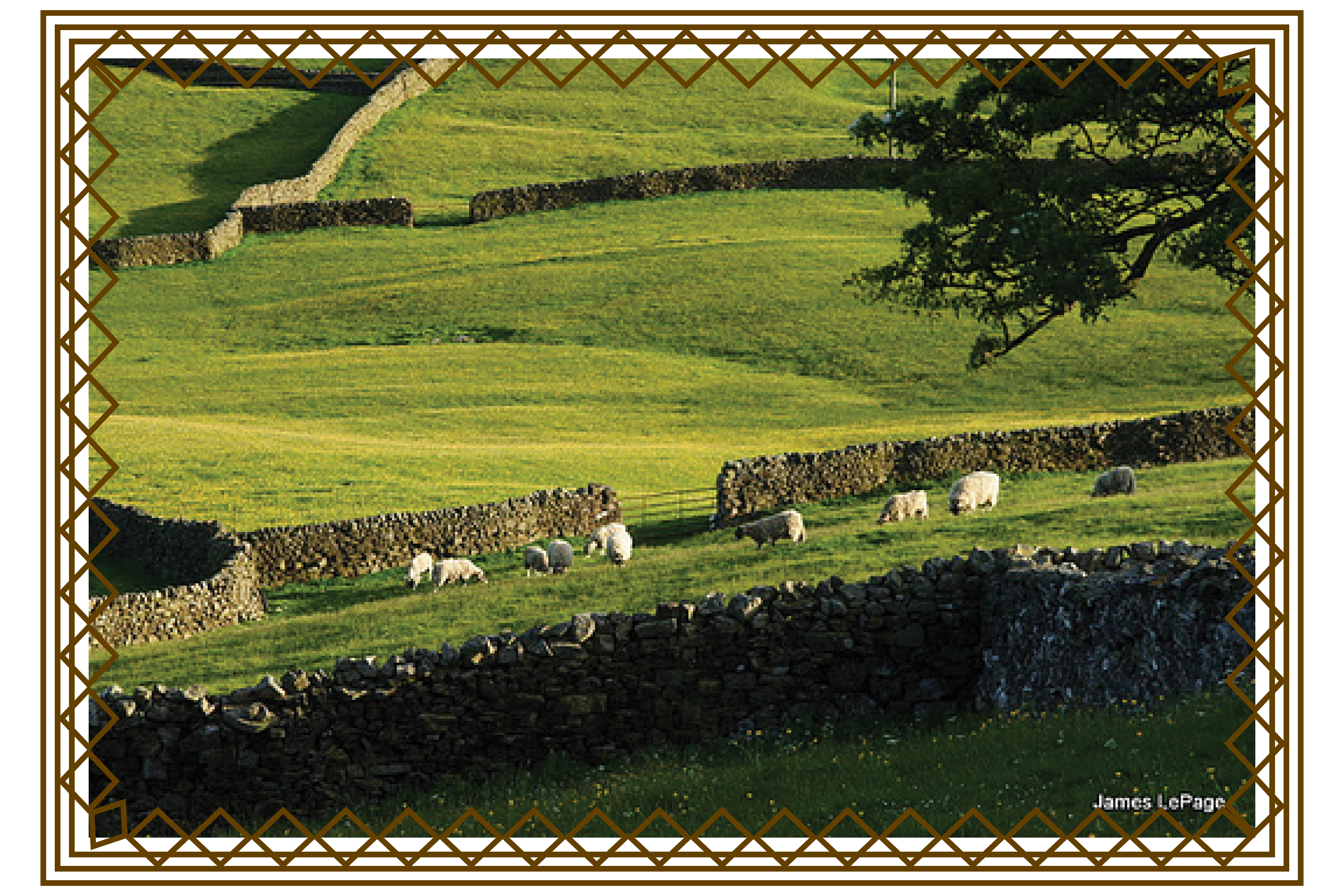
In our first move abroad, while skirting the North Sea in a taxi cab from the Edinburgh Airport to The Flat I Had Not Seen, Dave praised the rolling green hills spotted with sheep and lined with stone walls, enraptured with some sort of pastoral bliss. I, on the other hand, cried. Putting thousands of miles and an ocean between us and our friends and family somehow did not have the same inspiring effect on me.

At least not at first. In between that day and this one, I have lived in places of unspeakable beauty. I have shared a running route with Eric Liddel, regularly visited splendid castles and wandered around the Black Forest. Just yesterday, I happened upon a 12th century church with a well which served as inspiration for Lewis Carroll’s Alice in Wonderland – just before dinner, a fifteen minute walk from my flat. Those back home who think of living abroad as an enviable adventure are not far off.

But that’s not the whole story. While there certainly is some romance to country hopping, such transience brings with it layers of challenge, from the mundane to the profound. What on earth is the German equivalent of condensed milk? Why does it take four hours to wash a load of laundry here? Where will I work? Will my niece and nephews remember me after not seeing me for long stretches at a time? How will anyone really know me if I don’t stay long enough in one place to form genuine relationships? The questions trip over themselves at first, and transform over time from the urgent practical questions that require immediate answers, to the deeper questions about vocation and identity. Uniting them is a sense of unsettledness, of disquiet in the face of change.

Facing an uncertain future – practically a definition of time spent with a spouse who is studying – invites one to engage the unknown in the mode of trust. Each move, whether physically moving to another place or simply reaching a new season, represents another chance to show bravery. Most of the time, I feel more like an ostrich hiding its head in the sand than an eagle taking the opportunity to spread its wings and soar (can you tell I’ve been reading animal books to my nine month old?), but because of my faith, I am learning that God condescends to meet our cowardice with courage.  In spite of my grumbling recalcitrance, God in his rich love chooses to give us more than we need to press on. In the end, the most lasting help against fear is not a stable income, a comfortable living situation, a routine, but the accompaniment of God himself. But the fact that courage is commanded in Scripture, rather than portrayed as the constant possession of the believer, suggests that this courage is always something to be sought and re-sought:

Have I not commanded you?

Be strong and courageous.

Do not be frightened, and do not be dismayed,

for the Lord your God is with you wherever you go.

Most days I find myself living somewhere between the promise and the command, called out of fear and into trust, but struggling to meet the future without nail-biting apprehension.

Anyone else facing these difficult lessons in courage?